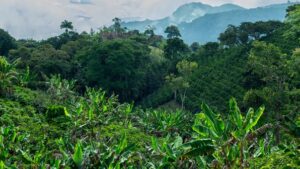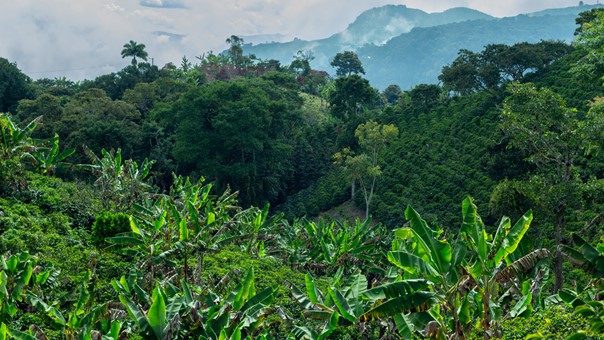
Sustainable coffee farming through mixed cropping is not only ecologically beneficial but also economically profitable. This is particularly evident in countries like Thailand and Laos, where the combination of coffee plants with shade-providing trees, such as banana or mango trees, enhances ecosystems and strengthens farmers’ livelihoods. With the recently signed free trade agreement between Switzerland and Thailand, new opportunities arise to further promote sustainable coffee farming and enhance international trade
Benefits of Mixed Cropping in Thailand and Laos
Agroforestry, where coffee is grown in combination with trees, provides farmers with increased biodiversity and healthier soil. Trees offer shade, improve the microclimate, and protect coffee plants from pests. This method is especially important in tropical countries like Thailand and Laos, which, due to their rich biodiversity and climatic conditions, are ideally suited to successfully implement sustainable farming methods.
The introduction of mixed cropping in Laos has enabled small-scale farmers to increase their yields while reducing their reliance on chemical fertilizers and pesticides. This approach is not only environmentally friendly but also economically advantageous, as farmers can achieve higher prices on the international market due to the superior quality of their products.
Impact of the Free Trade Agreement
The free trade agreement between Switzerland and Thailand offers a unique opportunity to improve export conditions for sustainably produced coffee. With trade barriers removed and import processes simplified, coffee producers in Thailand and Laos can more easily bring their products to the Swiss market. This is a crucial step in fostering demand for coffee grown in mixed cropping systems while also making prices more attractive to consumers.
Additionally, the agreement provides farmers with access to Swiss technologies and expertise, which could further optimize sustainable farming practices. For example, digital monitoring systems could be implemented to track plant health and soil erosion in agroforestry systems. These innovations can help increase productivity while minimizing environmental impacts in the long term.
Sustainable Prospects for the Region
Thailand and Laos have a long history of coffee cultivation. While monoculture farming was the focus in the past, there is now growing recognition that mixed cropping presents a sustainable alternative. In Laos, for instance, a return to agroforestry systems has revitalized degraded land. The introduction of shade-providing trees has not only improved coffee quality but also reduced erosion and increased carbon sequestration in the soil.
The combination of traditional knowledge and modern trade opportunities, as offered by the free trade agreement, could position the region as a pioneer in sustainable coffee farming. With growing demand for environmentally friendly products in Europe and other markets, these countries face a promising future.
Conclusion: A Model for the Future
Mixed cropping in coffee farming is a prime example of how agriculture can be designed to be both ecologically and economically sustainable. Thailand and Laos, thanks to their climatic and geographic conditions, are ideal locations to further expand this method. The free trade agreement with Switzerland provides additional momentum to establish this sustainable farming approach in international markets. The advantages are clear: better prices for farmers, higher coffee quality for consumers, and stronger conservation of ecosystems.